
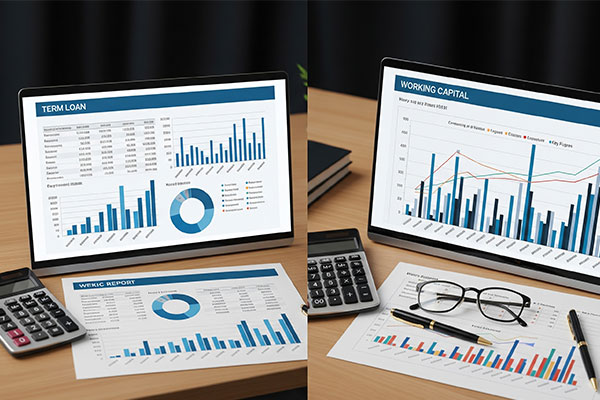
Understanding Finance Document Types for Small Manufacturers in Purnea
For small manufacturing business owners in Purnea and nearby districts, managing finances effectively is key to growth and stability. When applying for loans, one essential document banks request is the Credit Monitoring Arrangement (CMA) data. But did you know that CMA data differs depending on whether you’re applying for a term loan or working capital?
At Avyud Consultancy, we specialize in helping local manufacturers navigate these differences smoothly. This article will walk you through the key distinctions in CMA data for term loans vs working capital, empowering you to prepare the right documents and improve your chances of loan approval.
What is CMA Data and Why Does It Matter?
CMA data is a comprehensive financial report prepared for banks and financial institutions. It provides detailed insights into your business’s financial health, including projections, turnover, liabilities, and more. This data helps lenders assess your repayment capacity and risks before approving loans.
In Bihar, especially in Purnea’s growing manufacturing sector, banks are increasingly particular about the accuracy and structure of CMA data to avoid delays and rejections.
CMA Data for Term Loans: What to Expect
Term loans are typically used for capital expenditures such as buying machinery, expanding premises, or upgrading technology. Since these loans involve large amounts over a longer duration, banks require detailed financial planning.
Key Components of CMA Data for Term Loans:
- Detailed Fixed Assets Information: Breakdown of machinery, land, buildings, and other fixed assets you plan to acquire.
- Repayment Schedule: Clear timelines showing how and when you intend to repay the loan.
- Projected Income & Expenditure: Forecasts for revenue and expenses related to the capital investment.
- Long-term Liability Structure: Details on how the term loan fits within your overall debt portfolio.
- Cash Flow Projections: Emphasis on how the investment will generate cash flow to service the loan.
This data helps banks understand the viability of your project and your ability to generate returns over the loan period.
CMA Data for Working Capital: What to Expect
Working capital loans finance your day-to-day operations like purchasing raw materials, paying wages, and managing short-term expenses. Since these loans usually cover smaller amounts over shorter durations, the CMA data focuses on liquidity and operational cycles.
Key Components of CMA Data for Working Capital:
- Current Assets & Liabilities: Details about inventory, receivables, payables, and cash reserves.
- Turnover & Credit Cycle: Analysis of how quickly your business converts raw materials to sales and cash.
- Short-term Borrowings: Existing overdrafts or other working capital loans.
- Bank Statement & Cash Flow: Recent bank transactions demonstrating liquidity.
- Operating Profit Margins: Insights into day-to-day profitability.
This data helps banks evaluate your ability to manage operational expenses without cash crunches.
Why Does the Difference Matter for Your Loan Application?
Many small manufacturers in Purnea face delays or rejections simply because the CMA data submitted does not match the loan type’s expectations. For example, submitting term loan-style CMA data for a working capital loan can confuse lenders or signal poor financial planning.
By understanding the structural differences, you can:
- Submit the right documents promptly.
- Avoid unnecessary back-and-forth with banks.
- Present your business as credible and organized.
- Increase the chances of faster loan approval.
Practical Checklist for Preparing CMA Data in Purnea
| Term Loan CMA | Working Capital CMA |
| List of fixed assets to be purchased | Detailed inventory and receivables data |
| Long-term repayment schedule | Short-term cash flow and bank statements |
| Income and expenditure projections | Credit cycle and turnover analysis |
| Details of existing long-term debts | Details of existing short-term borrowings |
| Projected cash flow over loan tenure | Operating profit margins |
Case Study: How Avyud Consultancy Helped a Purnea Manufacturer
One of our local clients, a small textile manufacturer, approached us to apply for a machinery upgrade loan. Initially, their CMA data resembled a working capital format, focusing mainly on inventory and daily expenses. We helped restructure their data to highlight fixed assets, long-term repayment plans, and cash flow projections.
Result? The loan officer appreciated the clarity, and the loan was approved in record time. This example illustrates how understanding the differences can make a real impact.
Final Thoughts: Your Trusted Local Partner
At Avyud Consultancy, we pride ourselves on being a trusted local expert in Purnea and nearby districts, guiding small manufacturers through the maze of financial documentation. Whether you’re applying for term loans or working capital, we help you prepare accurate, lender-ready CMA data to smooth your path.
If your loan application is stuck, delayed, or if you need guidance on the right CMA data format, get in touch with Avyud Consultancy. We’re here to help you grow your manufacturing business with confidence.
Contact Us:
📧 info@avyud.in | 🌐 www.avyud.in | 📞 +91-8100666111 & +91-8884700074
Need Help with GSTR-C Filing?
Get in touch with Avyud Consultancy—your reliable compliance partner in North Bihar. Whether it’s reconciling data, fixing errors, or preparing audit-proof reports, we’re here to guide you.
📩 info@avyud.in
🌐 www.avyud.in
📱 +91-8100666111 | +91-8884700074