Prepare Your Business for Seamless GST E-Invoicing Compliance
As India continues its digital push under the Goods and Services Tax (GST) regime, e-invoicing has emerged as a major reform for improving tax compliance, reducing fraud, and bringing transparency in business transactions. If you’re a business owner in Purnea or surrounding areas of Bihar, understanding e-invoicing is not just important—it’s essential for staying compliant and competitive.
In this blog, we’ll walk you through the basics of GST e-invoicing, provide a handy compliance checklist, and explain how your business can smoothly transition into this system. Whether you’re a small enterprise scaling up or an established player managing multiple clients and vendors, this guide is tailored for you.
What is E-Invoicing Under GST?
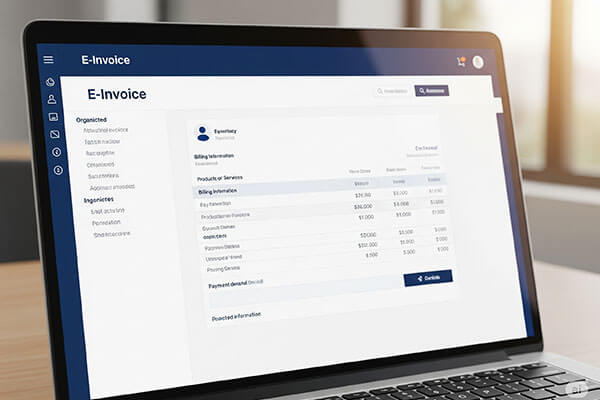
E-invoicing, or electronic invoicing, refers to the system under which invoices generated by a business are electronically authenticated by the GST Network (GSTN). A unique Invoice Reference Number (IRN) is generated for each invoice by the Invoice Registration Portal (IRP), which is then used for GST filings and real-time tracking.
Introduced in a phased manner, e-invoicing is now mandatory for businesses with aggregate turnover exceeding ₹5 crore in any financial year since 2017-18. This threshold may be reduced in the future, so even smaller businesses in Purnea and nearby towns like Araria, Katihar, and Kishanganj must begin preparing now.
Why E-Invoicing Matters for Purnea-Based Businesses
Here’s how GST e-invoicing benefits local businesses:
- Reduces GST Filing Errors: Pre-filled GSTR-1 returns mean fewer mistakes.
- Faster Input Tax Credit (ITC): Real-time reporting allows buyers to claim ITC promptly.
- Eliminates Fake Invoices: With authentication from the GSTN, the risk of fraud is minimized.
- Streamlines Compliance: Standardized formats reduce reconciliation issues.
- Boosts Business Credibility: E-invoice compliance signals financial discipline to banks and investors.
💡 Local Insight: In our experience working with businesses in Purnea, we’ve seen how e-invoicing has helped improve loan processing time, especially when paired with professionally prepared CMA data and project reports.
E-Invoicing Applicability: Is Your Business Covered?
Check if your business falls under e-invoicing mandate:
| Criteria | Applicability |
| Turnover exceeds ₹5 crore (from FY 2017-18 onwards) | ✅ Required |
| Registered under GST as a regular taxpayer | ✅ Required |
| Businesses supplying B2B goods or services | ✅ Required |
| Exempted categories like SEZ units, banking companies | ❌ Not Required |
🎯 Tip: Even if you’re not yet required to generate e-invoices, adopting the process early can help future-proof your operations and simplify audits.
E-Invoice Compliance Checklist
Here’s a step-by-step checklist tailored for businesses in Purnea to stay compliant with GST e-invoicing:
- Assess Turnover
Review your turnover across all GSTINs linked to your PAN since FY 2017-18. - Update Billing Software
Ensure your ERP or accounting system supports e-invoicing and JSON generation. - Register on IRP Portal
Visit https://einvoice1.gst.gov.in and register using your GST credentials. - Test Your Integration
Run test invoices before going live to validate fields and correct any formatting errors. - Train Your Team
Ensure your accounts and billing staff are trained on the new process and portals. - Recheck Vendor & Buyer GSTINs
Make sure you have updated GSTINs for all B2B clients—errors here can block ITC claims. - Validate Each Invoice
Every invoice must be uploaded to the IRP and receive a valid IRN and QR code. - Monitor for Errors
Set up alerts or reports to catch invoice mismatches, especially with GSTR-1 filings. - Keep Digital Backups
Store authenticated invoices with IRNs securely for audits and reconciliation.
Stay Updated on Thresholds
Keep an eye on GST Council updates—e-invoicing thresholds may be revised downward.
Common Mistakes to Avoid
From our hands-on experience with businesses in Bihar, here are a few mistakes we often encounter:
- Using old invoice formats that don’t include mandatory e-invoice fields.
- Skipping training for staff, leading to avoidable compliance lapses.
- Missing reconciliation between e-invoices and GSTR-1 or GSTR-3B returns.
- Delaying IRN generation, especially during high billing periods.
These issues may seem minor, but they can cause cash flow delays, block ITC, or even trigger GST notices.
Case in Point: How One Purnea Trader Benefited
A local wholesale trader in Purnea dealing in FMCG goods was struggling with delayed input credits and loan rejections due to lack of documentation clarity. After implementing e-invoicing and approaching Avyud Consultancy for a bankable CMA data report, their GST returns improved significantly, and their loan application for business expansion was approved within 30 days.
Ready to Simplify Your GST Compliance?
The shift to e-invoicing may seem technical, but with the right tools and local expertise, your business can adapt quickly. At Avyud Consultancy, we help Purnea-based entrepreneurs and traders not only stay GST-compliant but also prepare strong CMA Data and project reports to unlock funding opportunities.
📞 Need help?
info@avyud.in | www.avyud.in
📱 +91-8100666111 | +91-8884700074
Final Thoughts
E-invoicing under GST is more than a compliance requirement—it’s a gateway to digital efficiency, financial discipline, and business growth. As thresholds lower, more businesses in Purnea and nearby districts will be brought under its scope. Start preparing now, avoid last-minute rushes, and position your enterprise as a proactive, audit-ready business.
Get in touch with Avyud Consultancy—your local expert for GST solutions, project finance support, and reliable documentation. No hard-sell—just practical help, honest advice, and tailored support.