
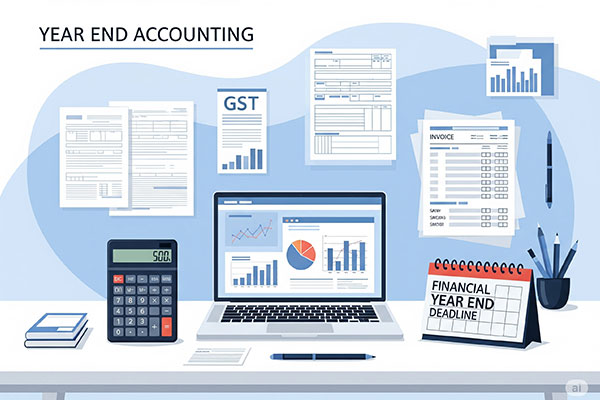
Essential steps for small manufacturers in Purnea and nearby districts
As the financial year draws to a close, small manufacturing businesses in Purnea and neighboring districts face the crucial task of wrapping up their accounts and GST compliance efficiently. A clear and organized year-end process is vital not only to meet legal obligations but also to set a strong foundation for the new fiscal year.
At Avyud Consultancy, we understand the challenges faced by local manufacturers when it comes to GST compliance and financial closing. This article walks you through a practical year-end GST checklist and highlights key tax closing activities every GST-registered firm should follow. Whether you are new to GST or looking to streamline your processes, this guide will help you close the year with confidence.
Why a Year-End GST Checklist Matters
The financial year-end is more than just a date on the calendar—it is a period that demands attention to detail and accuracy. Proper year-end closing activities ensure:
- Compliance with GST laws and avoid penalties
- Accurate financial reporting for tax and audit purposes
- Smooth transition into the next financial year
- Better financial planning and decision-making
Missing or delaying these tasks can lead to compliance risks, unnecessary interest payments, and added stress during audits or loan applications.
Year-End GST Checklist: Key Activities for Small Manufacturers
Here is a comprehensive checklist tailored for small manufacturing units in Purnea and nearby districts to help you complete your GST year-end activities efficiently:
1. Reconcile GST Returns and Books of Accounts
Ensure your GST returns (GSTR-1, GSTR-3B, etc.) filed during the year match your accounting records. Discrepancies can cause issues in your annual return filing and may trigger notices.
- Cross-check invoices issued with returns filed
- Verify purchase invoices and input tax credit (ITC) claims
- Resolve any mismatches or errors before the year closes
2. File Annual GST Return (GSTR-9)
Every GST-registered business with turnover above the prescribed threshold must file GSTR-9. Even if your turnover is below the limit, it’s good practice to maintain compliance with the annual summary.
- Gather monthly/quarterly return data
- Check for any unclaimed ITC or errors to rectify
- Submit the return before the due date to avoid penalties
3. Check and Settle Outstanding GST Payments
Clear any pending GST liabilities, including interest or late fees, to avoid accumulation and future legal complications.
- Review your GST ledger for pending dues
- Plan payments for outstanding amounts promptly
- Keep records of all GST payments for audit reference
4. Inventory Valuation and Stock Reconciliation
Accurate inventory valuation is essential for correct GST calculations and financial reporting.
- Conduct a physical stock count before the year closes
- Adjust inventory records for discrepancies
- Value closing stock as per GST and accounting standards
5. Verify Input Tax Credit (ITC) Eligibility
Review your ITC claims to ensure you have claimed only eligible credits and maintain proper documents to support your claims.
- Check for blocked credits such as personal use or exempt supplies
- Maintain invoices, bills, and related documents securely
- Reverse any ineligible ITC before filing annual returns
6. Review Compliance on Advances and Advances Received
Properly account for GST on advances received or paid during the year to avoid confusion or double taxation.
- Reconcile advances with final invoices issued or received
- Adjust GST liability accordingly
7. Update and Maintain GST Records
Organized record-keeping simplifies audits and legal compliance.
- Ensure all GST invoices, debit/credit notes, and bills are properly filed
- Maintain records electronically and physically for at least 6 years
- Backup data securely
Practical Tips for Smooth Year-End Closing
- Start Early: Begin preparations at least a month before the financial year ends.
- Use Accounting Software: Leverage GST-compliant software for easy reconciliation and reporting.
- Consult a GST Expert: Local GST nuances can be tricky—getting advice helps avoid costly mistakes.
- Train Your Team: Ensure staff involved in GST filing understand the compliance requirements.
How Avyud Consultancy Supports Small Manufacturers in Purnea
At Avyud Consultancy, we specialize in helping small manufacturing businesses in Purnea and nearby districts manage their GST and year-end financial activities smoothly. With our local expertise, we offer:
- Personalized GST compliance support tailored to your business size and sector
- Hands-on assistance in GST reconciliation and return filing
- Guidance on ITC claims, tax planning, and dispute resolution
- Reliable record-keeping practices for audit readiness
We understand the local business environment and regulatory updates, ensuring your GST year-end closes without hassle.
Final Words: Prepare Today for a Confident Tomorrow
A well-managed financial year-end process with the right GST checklist saves time, money, and stress. Small manufacturers who take these steps seriously are better positioned for compliance and growth.
If you need expert assistance with your year-end GST checklist or any tax closing activities, reach out to Avyud Consultancy. We are your trusted local partner in Purnea for making GST compliance straightforward and stress-free.
Get in touch:
info@avyud.in
www.avyud.in
+91-8100666111 | +91-8884700074
Avyud Consultancy – Your reliable GST and financial year-end partner in Purnea and beyond.