Understanding Why Your Input Tax Credit (ITC) Might Be Disallowed and How to Fix It
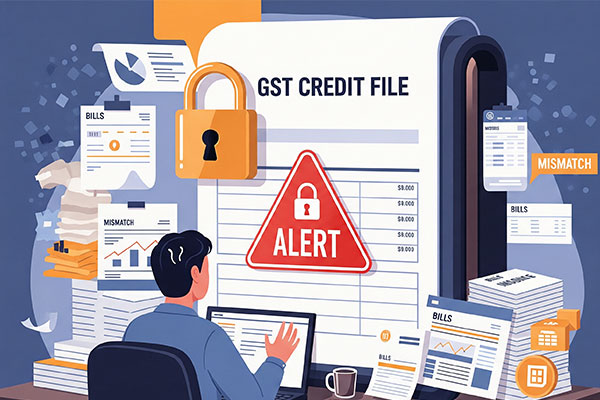
As a small manufacturing business owner in Purnea or nearby districts, managing your GST filings efficiently is essential for smooth operations. One common challenge businesses face is the blocking of Input Tax Credit (ITC), which can affect your cash flow and increase your tax liability. If you’ve recently noticed that your GST credit is blocked or your GST credit issue is causing confusion, you are not alone.
At Avyud Consultancy, we understand the intricacies of GST compliance, especially for local businesses in and around Purnea. This article aims to help you understand the common reasons behind blocked ITC and practical steps to resolve these issues.
What Is Input Tax Credit (ITC)?
Before diving into the reasons why ITC might be blocked, it’s important to quickly recap what ITC means. ITC allows businesses to claim credit for the GST paid on purchases, which can then be used to offset the GST liability on sales. This system helps avoid the cascading effect of taxes and supports smoother business operations.
However, ITC is subject to strict rules and regulations under the GST Act, and certain scenarios can lead to your ITC being blocked or disallowed.
Common Reasons for Blocked ITC
1. Non-Compliance by Your Supplier
One of the biggest reasons for GST credit blockage is when your supplier has not filed their GST returns properly or has mismatched invoices in the GST portal. If the supplier fails to upload their invoices or there are discrepancies in the details, the input credit claimed by you may be blocked.
2. Incorrect or Incomplete Invoice Details
Your GST credit claims must match the invoice details uploaded by your supplier. Errors such as wrong GSTIN, mismatched invoice numbers, or incorrect taxable values can cause ITC to be blocked during the GST return reconciliation process.
3. Blocked Items under GST Law
Certain goods and services are explicitly disallowed for ITC under GST rules. For example, expenses related to motor vehicles for personal use, food and beverages, and goods used for personal consumption are typically blocked credits.
4. ITC on Goods/Services Used for Non-Business Purposes
If the input goods or services are used partly for business and partly for personal use, ITC can only be claimed proportionately. Claiming full credit without proper apportionment can lead to blockage or disallowance.
5. Late Filing of GST Returns
Filing your GST returns after the due date can also cause your input credit to be blocked for that period. Timely filing is crucial to ensure smooth credit flow.
6. Transactions Involving Composition Scheme Dealers
If you have made purchases from suppliers registered under the Composition Scheme (who cannot charge GST), you are not eligible to claim ITC on those purchases.
7. Suspicious or Fraudulent Transactions
GST authorities may block ITC if there are suspicions of fraudulent transactions, fake invoices, or tax evasion. In such cases, further investigation may be initiated.
How to Resolve Blocked ITC Issues?
Blocked ITC can impact your business cash flow and profitability. Here are some practical steps to resolve these issues:
- Reconcile Supplier Invoices Regularly: Regularly match your purchase records with your supplier’s GST filings to identify mismatches early.
- Communicate with Suppliers: If discrepancies are found, ask your supplier to rectify their returns or reissue invoices correctly.
- Verify Invoice Details Before Claiming ITC: Always cross-check invoice numbers, GSTINs, and taxable amounts.
- Ensure Timely GST Return Filing: Filing GSTR-1 and GSTR-3B on time helps avoid unnecessary blocking of credit.
- Review GST Compliance for Blocked Items: Know which items are ineligible for ITC to avoid wrongful claims.
- Seek Professional Help for Complex Cases: If you face recurring ITC blockages or notices from GST authorities, consulting GST experts like Avyud Consultancy can save time and prevent costly errors.
Checklist for Small Manufacturers in Purnea and Nearby Districts
| Action Item | Status (✓/✗) |
| Verify supplier GSTIN and invoice data | |
| Confirm supplier has filed GSTR-1 | |
| Cross-check GST return filing dates | |
| Ensure no blocked items claimed | |
| Maintain proper usage records for inputs | |
| File GST returns before due dates |
Case Study: How Avyud Consultancy Helped a Local Manufacturer
A small manufacturer in Purnea approached Avyud Consultancy after facing repeated GST credit blocks. Our team analyzed their supplier invoices, identified several mismatches, and helped communicate with suppliers for corrections. We also streamlined their filing processes to ensure timely returns. Within two months, their blocked ITC issues were resolved, improving their cash flow and compliance confidence.
Final Thoughts
Blocked ITC or GST credit issues can seem complicated, but with the right knowledge and approach, you can avoid common pitfalls. Staying updated on GST rules, keeping accurate records, and maintaining open communication with suppliers are key to smooth credit flow.
If you’re a small manufacturing business owner in Purnea or nearby districts struggling with blocked ITC or other GST compliance issues, Avyud Consultancy is here to help. Our local expertise and personalized service ensure that your GST processes are hassle-free.
Get in touch with Avyud Consultancy – Your reliable GST partner in Purnea.
info@avyud.in | www.avyud.in | +91-8100666111 & +91-8884700074